

This column is sponsored by Uptown Cheesesteak Company, located at 114 Broad Street in Kingsport, TN. Mention I-81 Sports when placing an order at Uptown and receive 10% off your bill.
Tragic news from the world of sports on Monday, as former NFL running back Chris Johnson revealed he has been diagnosed with ALS. In Johnson’s case, the disease already has progressed to the point he has lost the ability to speak; he answered questions during an appearance on “Good Morning America” using a device that generates speech through the movement of his eyes.
To see Johnson in such a state at the age of 40 is difficult to watch. He’s not the first prominent NFL player to develop ALS and, sadly, he will not be the last.
Football has become the great American pasttime. In 2025, NFL games accounted for 83 of the 100 most watched programs across all television last year. The 2025 regular season drew the second-highest ratings, ever. The league is a license to print money, generating $23 billion in revenue at last count. College football does huge business as well, especially in this region, with a fanaticism and a passion that borders on religious fervor. And high school games? Let’s just say this is the field for my alma mater in Tennessee:
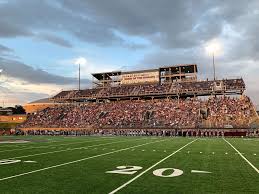
And that’s quaint and cozy compared to some of the gargantuan facilities elsewhere in the USA. Texas, for example.
Those Friday, Saturday, and Sundays on the gridiron come with a cost, though. A very profound and cruel physical cost. One study published in 2021 found that professional football players were four times more likely to develop ALS. We already know about the prevalence of chronic traumatic encephalopathy (CTE) among athletes in contact sports, and football in particular. The list of former football players who have passed away in a variety of strange circumstances, and then were found to have CTE after their deaths, is long and tragic.
Johnson played running back in the NFL — and was at one point arguably the best at that position in the game. He still holds the league record for total yards from scrimmage, racking up 2,509 in 2009 for the Tennessee Titans. He remains one of just nine backs in NFL history to run for at least 2,000 yards in a single season.
Johnson made 2,163 career carries, the vast majority of which ended in a collision of some sort. And that’s just his total in games. It doesn’t count exhibition games. It doesn’t count any practices. It doesn’t include the 624 carries he made across three seasons of college ball at East Carolina, or anything from those practices, or from his days playing high school ball. Or middle school. Or Pee Wee football. But, for his body, for his brain, that wear and tear added up. We know this. We have the science that shows it.
But do we care?
As noted on social media by Chris Nowinski, a former football player and pro wrestler who has advocated for greater concussion safety for nearly two decades now, the report had zero mention of the study cited earlier in this column, about NFL players having quadruple the chance of developing ALS.
Maybe the segment on Johnson lacked this data because it might distract from him and his own fight with ALS. Or maybe it was because the corporate conglomeration that includes the ABC network also includes ESPN, which generates huge revenue and ratings from the coverage of pro and college football.
Perhaps the saddest part of this entire situation is that nothing is going to change. Football is ingrained in the American culture. It’s certainly the most popular type of content we produce here, and that’s true of almost any sports media outlet. It’s bread and circuses, and we can’t get enough.
Even though we know the costs.
Even when those costs are tragic.