
By SCOTT FELTS
The way we are looking at this week’s key matchup is a little bit different than previous weeks.
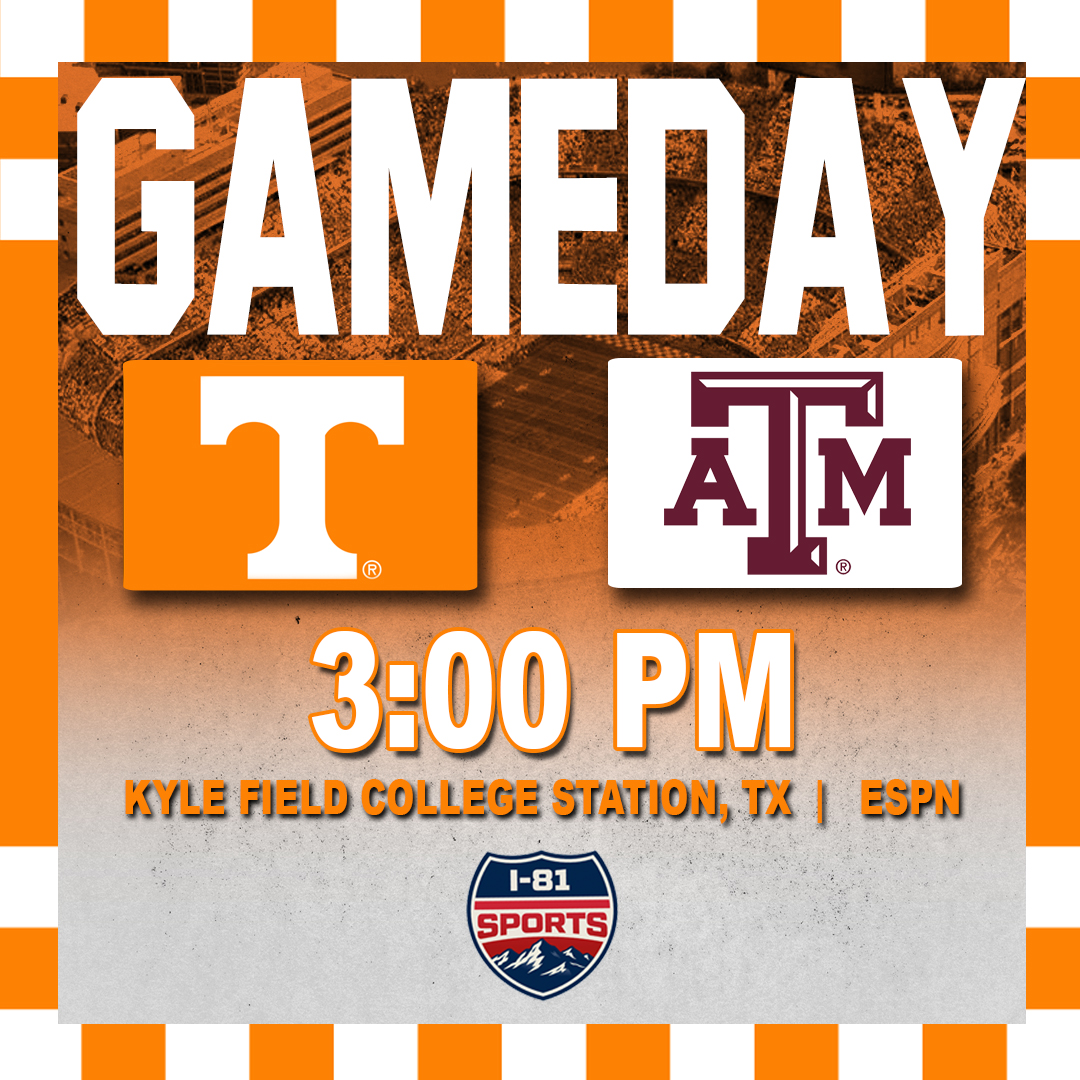
Not only will we look at the matchup between the Vols rushing attack and the Aggies’ defensive front seven as the Vols (7-2, 4-2 SEC) travel to Kyle Field to take on Texas A&M (4-5, 1-5) Saturday (3 PM, ESPN), but we will also look at how the Aggies compare to the two teams that beat Tennessee already this season.
The Aggies’ defensive size up front compares to Texas (excluding Longhorns’ monster NT Ian Geffrard), and A&M QB Marcel Reed is athletic and similar in playing style to the Gamecocks’ La’Norris Sellers.
The Vols are trying to avoid their third loss of the season as they jockey for playoff seeding and a possible trip to Atlanta for the final SEC Championship Game. The Aggies are desperate for a signature win under the lights of “Operation Blackout.”
Why it matters
The Vols’ offense runs through the ground game, which averages 216 rushing yards and has scored 24 rushing touchdowns through nine games while the Aggies’ defense has been more competitive against the run than the pass. The team that controls the line of scrimmage, and owns the clock and field position, should also enjoy the game’s final result.
A look at the Vol side of it
Tennessee’s identity on both sides of the ball is physical and relentless. Named a semifinalist for the Walter Camp Player of the Year, Maxwell Award, and Burlsworth Trophy, DeSean Bishop has been the clear engine on offense with 196 carries for 1,066 yards (5.4 per carry) and 13 touchdowns. He leads the nation in multiple second-half production categories and has piled up 100-yard games against ranked competition, including 159 yards and two scores versus Alabama and 220 yards with three touchdowns against Auburn.
Daune Morris adds another 434 yards. The Vols average 5.0 yards per carry as a team and score 32.4 points per game.
Against Texas on Sept. 26, Tennessee managed only 70 rushing yards in a 20-17 loss; Bishop was limited to 11 carries for 34 yards against one of the nation’s stingiest fronts.
When the Vols stay committed to the run and protect the football, they can move the chains against most SEC defenses.
A look at the A&M side of it
Texas A&M’s defense allows 320 total yards and 18.7 points per game. That sits well behind Texas, which allows just 280.1 yards and 17.4 points while ranking among the national leaders in yards per play allowed (around 4.1) and stuffing the run (roughly 100-101 yards allowed per game).
The Longhorns’ front, led by elite edge production from Colin Simmons, is simply more disruptive and consistent week to week. A&M’s unit has been more middle-of-the-pack in SEC play and has shown vulnerability when physical backs stay patient which is Bishop’s bread and butter.
The Aggies’ best defensive man up front is sophomore edge rusher Marco Jones, who has a team-leading 3.5 sacks and 3.5 tackles for loss through 9 games. He is the clear leader in disruption from the edge. He generates splash plays that the rest of the unit has largely lacked. At 6-5 and 261 pounds, Jones has the length and athleticism to win as a pass rusher while still contributing against the run.
Comparing Reed to Sellers
The Vols’ defense should have an easier day against the smaller, yet still athletic Reed than they did in Columbia against Sellers.
Reed has thrown for 1,641 yards with eight touchdowns and eight interceptions while completing 57% of his passes. Compare that to Sellers, who has been far more productive and dual-threat dangerous with roughly 2,100 passing yards, 17 touchdowns, seven interceptions, plus 637 rushing yards and seven scores on the ground.
Sellers accounted for 210 passing yards, 96 rushing yards, and three total touchdowns in South Carolina’s 27-24 win over the Vols. Reed has shown flashes but has not matched Sellers’ consistency or ability to create when the pocket collapses or the run game stalls.
Reed’s best performance of the season came against the Vols’ most recent opponent, Kentucky on September 19th in a 31-21 losing effort. Reed was 26 of 49 (53.1%) for 236 passing yards, a touchdown, and two picks, and added in 10 rushes for 80 yards (with a long of 40) and a rushing TD. He finished with 316 total yards and two total touchdowns.
Who has the edge?
Tennessee holds the edge. A&M’s front is not Texas-level in disruption or run-stopping consistency, which should open more lanes for Bishop than the Longhorns allowed. The Aggies’ defense also lacks the same ability to generate consistent negative plays that forced Tennessee into obvious passing situations in Knoxville.
On the other side, Reed has not shown Sellers’ dual-threat production or ability to punish defenses when the pocket breaks down. That combination favors a Tennessee approach that leans heavily on Bishop early, forces Reed into obvious passing downs, and trusts a Vols defense that has held most opponents under 16 points.
The formula is straightforward: stay physical, commit to the run, protect the football, and make Reed beat them from the pocket rather than creating with his legs the way Sellers did.
If Tennessee executes that plan, the differences between A&M’s units and the stronger versions the Vols have already faced (Texas’ elite front and Sellers’ dual-threat production) should tilt the game toward a road win for the Vols.
A&M needs early stops, home-field energy, and a clean, efficient night from Reed to flip the script and steal one from the Vols.