
By SCOTT FELTS
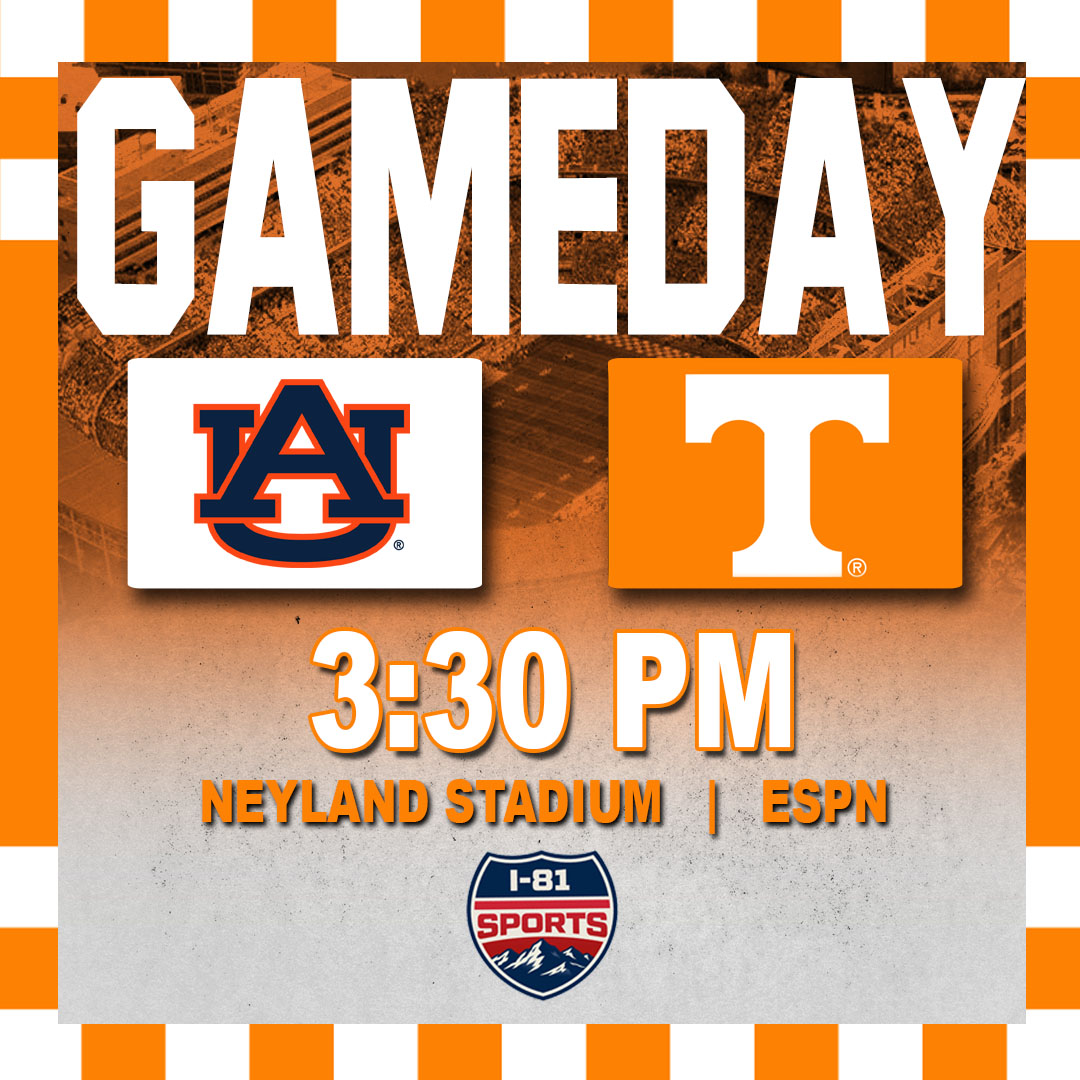
The mentor and the protégé meet in Knoxville. It goes down Saturday at 3:30 on ESPN, as No. 17 Tennessee (3-1, 0-1 SEC) hosts Auburn (3-1, 1-1 SEC). The key matchup won’t be on the field, but waged over head sets between Josh Heupel, the Vols head coach, and Auburn coach Alex Golesh, the former Tennessee offensive coordinator who helped Heupel build his modern offense into the best in the country before leaving to become a head coach himself.
The Matchup
There’s so much history here. Heupel hired Golesh as co-offensive coordinator at UCF in 2020, then brought him to Knoxville in 2021. Golesh was a Broyles Award finalist in 2022 when the Vols led the nation in scoring at 46.1 points per game, which is also the last time an FBS team averaged more than 46 points for a full season.
Golesh left for USF after that season, went 23-15 there, and now returns to Neyland as Auburn’s first-year head coach.
The storyline writes itself: Heupel’s offense has never been as good since Golesh left. The Vols led the SEC in rushing in 2023 and 2024 and in scoring in 2025 at 40 points per game, but the 2022 peaks of 525.5 yards per game and 7.23 yards per play have not been touched.
Golesh’s Auburn runs the fastest offense in the FBS at one play every 20.8 seconds, while Heupel’s Vols have slowed to 24.2 seconds per play, 22nd fastest. The question isn’t whether Golesh knows Heupel’s offense. It’s whether the Vols can beat the purer version of it that Golesh runs at Auburn.
Why It Matters
Both teams are 3-1 and staring down brutal October schedules. Auburn’s next six games include five opponents that are currently ranked and four games on the road. Tennessee’s offense has to prove it can score against a real defense after the Texas debacle. A loss here puts either team in a deep hole and for Heupel, losing to his former coordinator in his own stadium would be a brutal narrative.
The Heupel Side
Heupel’s offense is still the veer and shoot with wide splits, RPOs, read-option, and creative run schemes that Texas’ Steve Sarkisian praised as “very creative.” But it’s evolved. Heupel’s scheme offense is more efficient but less explosive. Tennessee currently ranks 23rd in scoring at 40.0 points per game, 39th in total offense at 438 yards per game, and fifth in points per opportunity at 5.31. But the Vols’ explosiveness ranks 78th nationally at 1.21.
True freshman Faizon Brandon is 58 of 93 for 697 yards, seven touchdowns, and zero interceptions. He is one of only nine full-time starters nationally with that many attempts and no picks. But against Texas he was 1-for-6 on throws beyond 10 yards, took 23 carries for 2 yards, and got sacked 10 times. Heupel said it plainly: “Offensively, we were not anywhere close to being good enough.”
The Golesh Side
Golesh’s first season has been a tale of two offenses. The Tigers are 3-1 with wins over Baylor and Vanderbilt which are both on the low end of the Power Four spectrum, and a 44-39 loss to Florida.
Byrum Brown, the USF transfer who followed Golesh, is 82-for-126 for 896 yards, six touchdowns, and five interceptions, plus 237 rushing yards and three scores. He’s the active FBS leader in total touchdowns responsible for, with 103.
Golesh’s Auburn team is less efficient than the Vols at 75th in scoring and 81st in yards per play, but more explosive, with that 94th-percentile explosive run rate and a passing attack that’s been more downfield-oriented.
But that inconsistency has shown itself the last couple games. Auburn went three-and-out on three drives against Florida and twice against Vanderbilt. The line gave up 24 tackles for loss and 13 sacks through three games. Golesh’s own words after the Florida loss: “The first three drives were abysmal.” After Vanderbilt, he admitted the slow starts are “100% on me.”
The Difference: Golesh vs. Heupel
Running at the fastest pace in the nation, Golesh hasn’t veered from the pure tempo he built at Tennessee in 2021-22, when the Vols ran 2.99 plays per minute, which was also tops in the nation, and led the country in scoring.
Heupel has adapted. He’s slowed the pace, diversified the run game, and built around personnel. Heupel’s Vols are a run-first team with a 58.2% run rate and 241.5 rushing yards per game, good for 4th nationally. DeSean Bishop is averaging 5.9 yards per carry.
Golesh’s Auburn is more balanced at 51% pass, 47% run, and leans on the quarterback’s legs more. Brown is a legit dual threat, and Golesh has called it a weekly discussion of how much designed run game to give him.
Heupel’s offense uses the run to set up the pass; Golesh’s uses tempo and space to create both. Neither has been quite as good apart as they were together.
Who Has the Edge
Tennessee, and it’s not particularly close. The Vols are at home in Neyland, where Auburn hasn’t won (or played) since 2013. Tennessee’s defense is the best in the SEC right now and their red zone offense is a perfect 100%, while Auburn’s red zone defense is 110th, allowing scores on 91.7% of trips.
Auburn’s offense can’t sustain drives, and Tennessee’s defense is built to punish exactly that.
The one thing Auburn has going for it is that Golesh knows this environment and Heupel’s offense better than anyone. He said it himself: “The greatest part of this coaching piece is the mental side of it, and is the ability to gameplan knowing what they know, knowing what they’ve seen.”
But knowing the offense doesn’t fix a line that can’t protect, a quarterback throwing five picks, and a team that can’t hold the ball.